Crowd size and guest count decide which of these boards is yours: a long table of friends grazing wants one big spread, while a bigger crowd moving around the room does better with the individual cups or bowls.
The ideas run from a pumpkin of hummus and a pumpkin-shaped cheese board to a turkey-shaped spread and a dessert board, and most lean on store-bought pieces.
1. Pumpkin Hummus
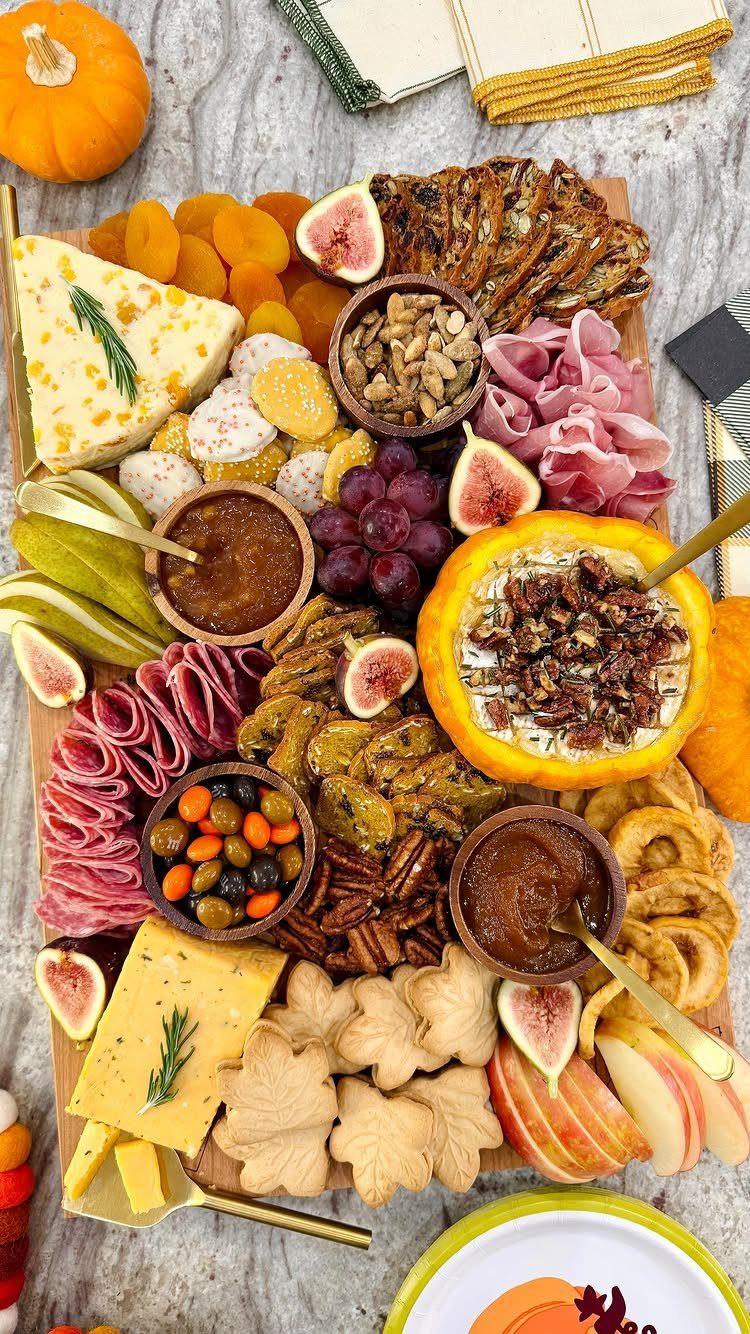
A hollowed-out pumpkin makes a dip bowl that costs almost nothing and doubles as the centerpiece.
Scoop it clean, dry the inside with a paper towel, and line it with a small dish or plastic wrap if you want zero risk of leaks.
Hummus suits the look because its pale, creamy color stands out against the orange shell. Set the pumpkin off to one side of the board so crackers and meats can fan out around it.
2. Brie, Gouda, and Cheddar Cheeses
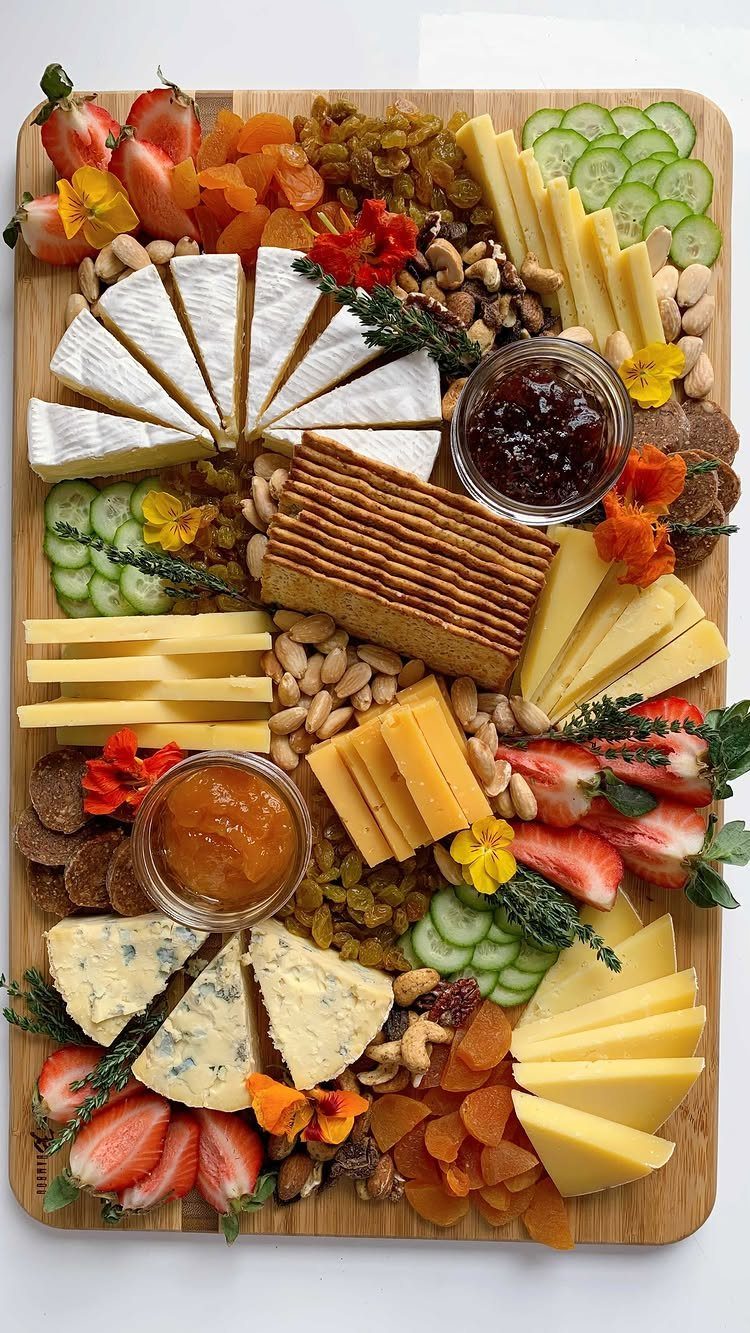
Three cheeses cover most of your guests: brie for the soft and mild crowd, gouda for the nutty one, cheddar for anyone who wants something sharp and familiar.
That mix is also easy on a budget, since you buy one wedge of each and skip the fancy extras.
Slice the gouda and cheddar ahead so people can grab pieces without a knife standoff, and leave the brie whole or cut in a single wedge. Jam beside the brie earns its spot.
3. Pickles and Olives
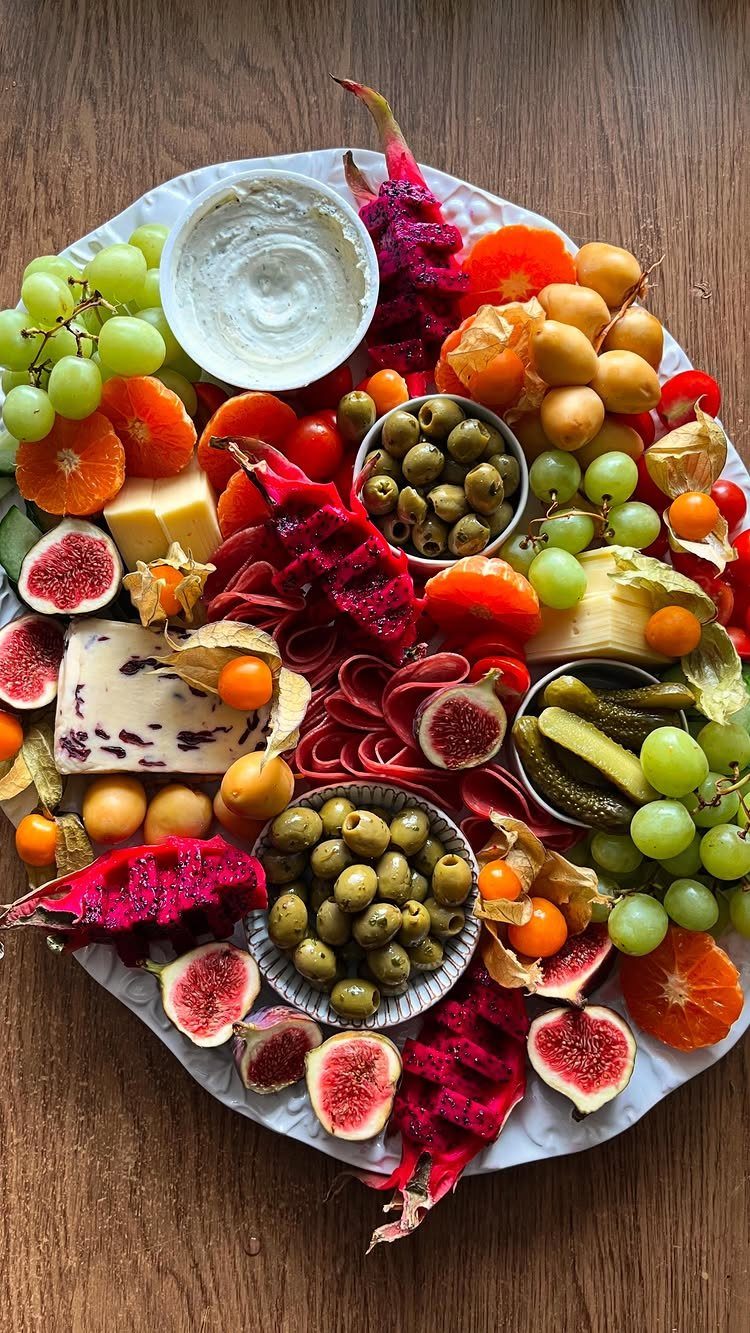
Briny bites cut through rich cheese and cured meat, which is why a few small bowls of olives and gherkins keep a heavy board from feeling flat.
Green olives and cornichon-style pickles both work, and they need no prep beyond draining.
Put them in bowls instead of directly on the board so the brine stays contained. Pat the olives dry before serving, and keep a small spoon in each bowl.
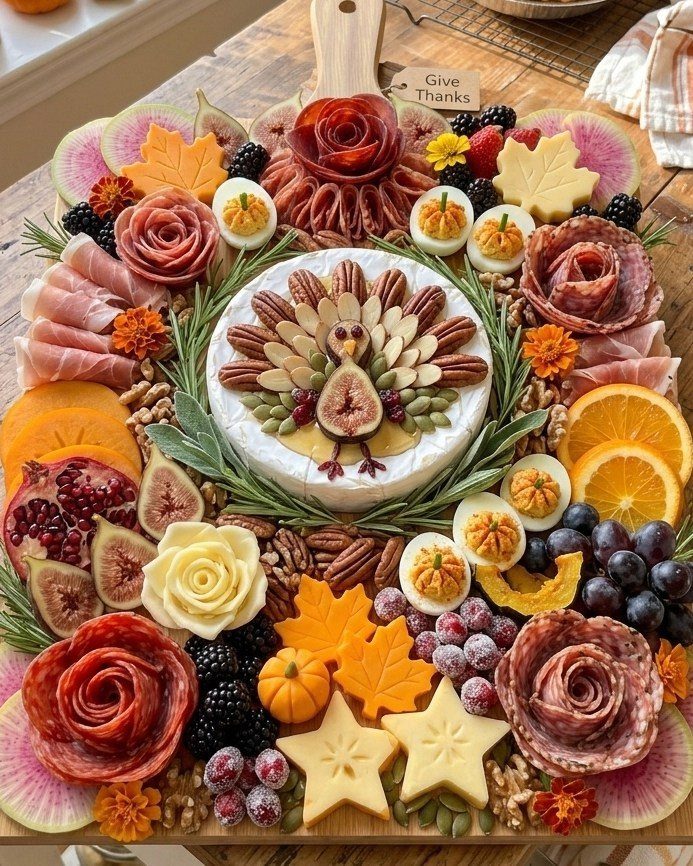
4. Thanksgiving Charcuterie Board
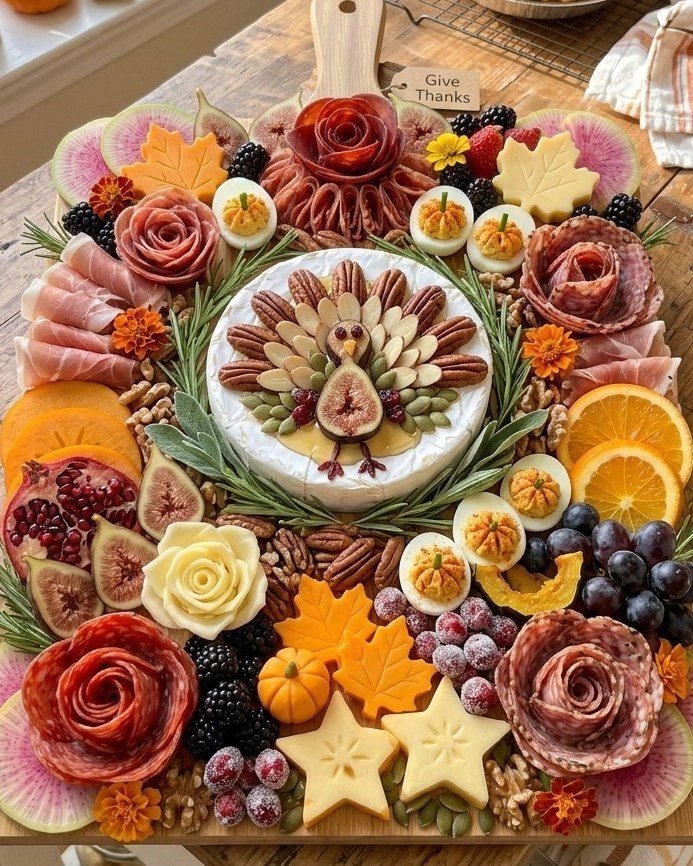
Brie shaped like a turkey does the work of a centerpiece, and meat roses and seasonal fruit fill in around it. A small "Give Thanks" sign finishes the board without needing any other decoration.
This is the one to pick if you want a single board that says Thanksgiving at a glance. Build the turkey first, then tuck the fruit and meats around it so nothing crowds the focal point.
5. Persimmons, Pomegranates, and Apples
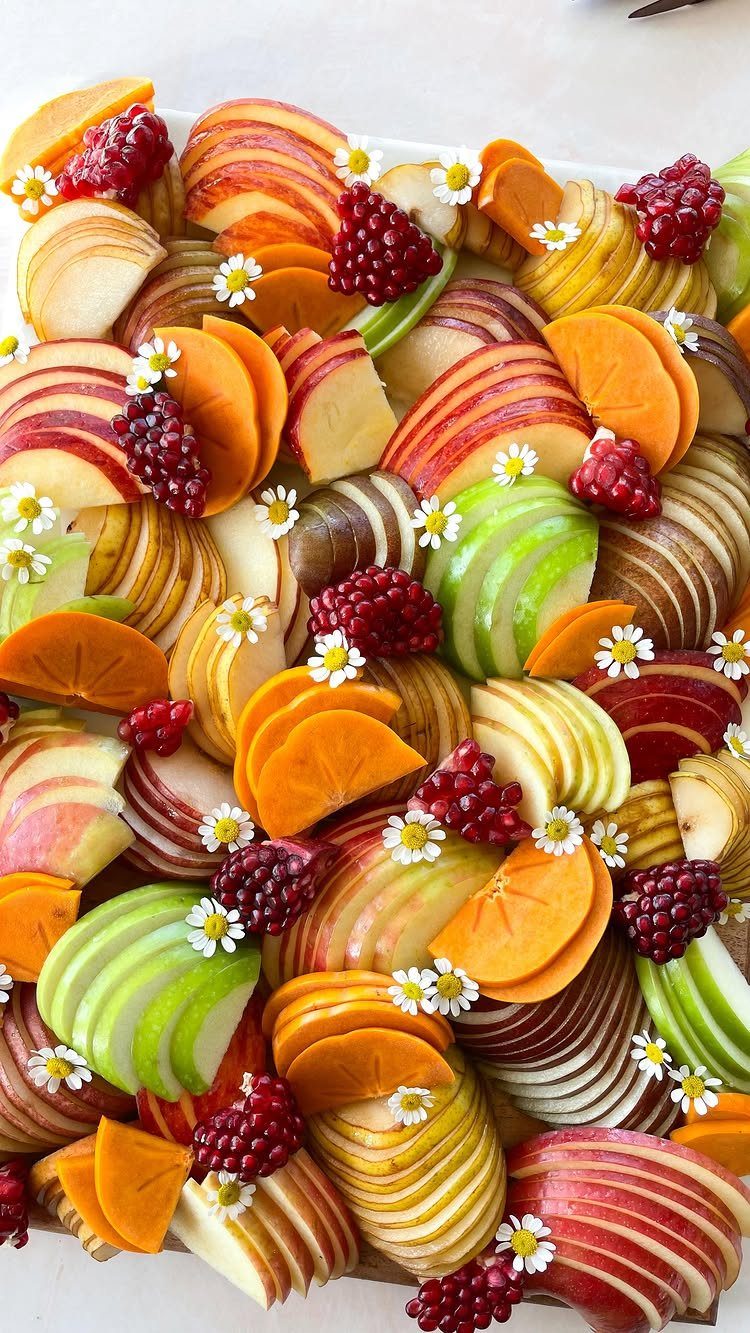
Apples, persimmons, and pomegranate seeds make a fruit-only board that feels autumn without a single cracker. Slice the apples and persimmons just before serving, and keep the pomegranate seeds in a small pile so they don’t stain the rest.
Fresh white daisies as garnish are a cheap, pretty finish; set them down between the fruit and keep them away from anything people will eat directly.
6. Barbecue Themed Board
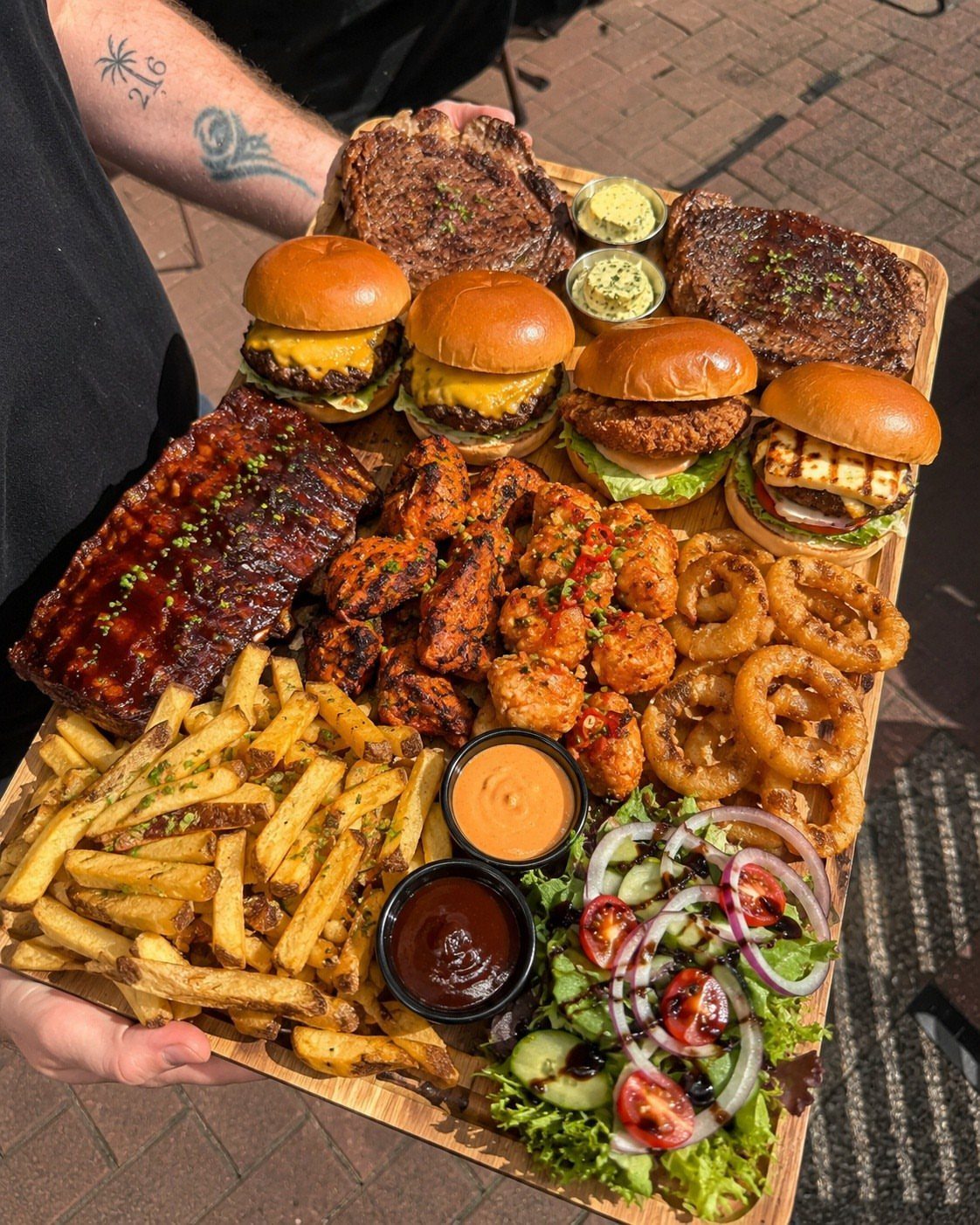
It suits a casual Friendsgiving where nobody wants to sit down to a formal plate.
Pick a board big enough to hold the hot items without crowding, and serve the sauces in separate bowls.
7. Vegetables
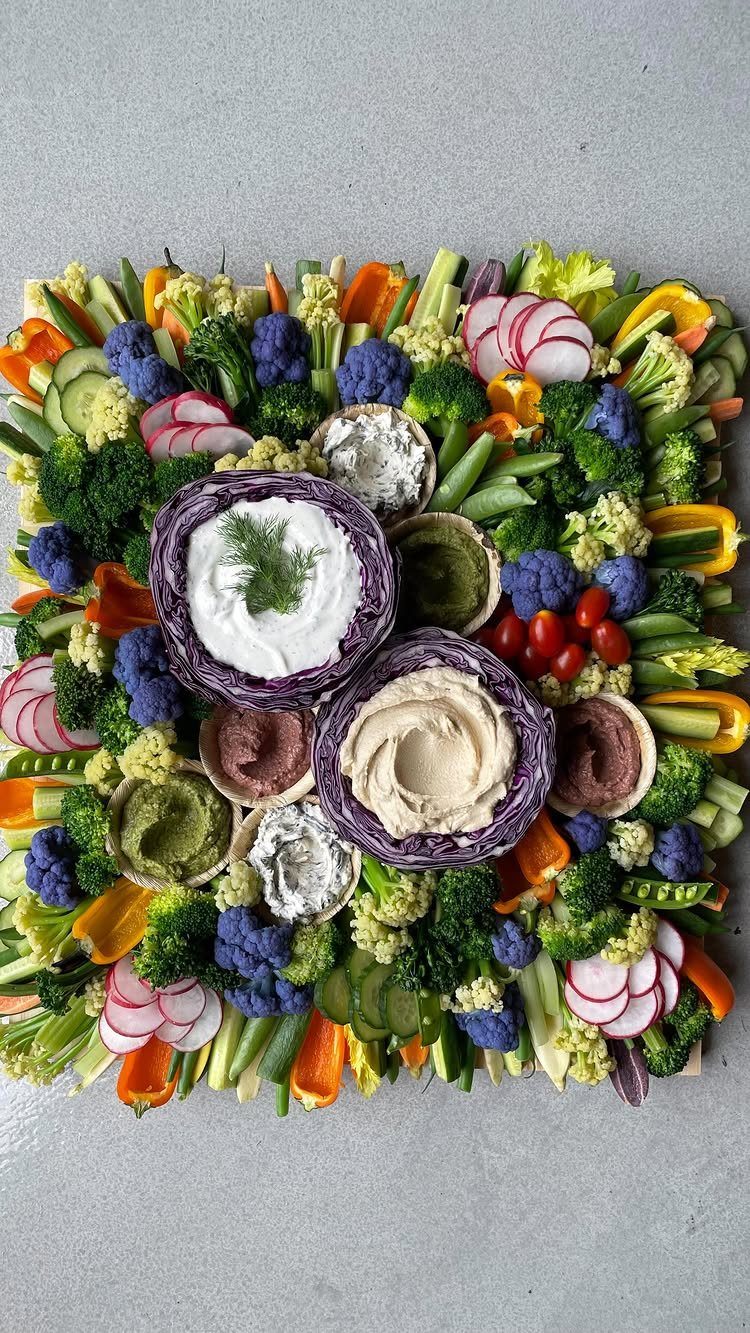
Raw broccoli, cauliflower, carrots, and radishes give a board the crunch and color that cheese and meat can’t.
Cut the florets and carrot sticks to a similar size so guests can grab them one-handed. Keep each dip in its own leaf and group the vegetables around the bowls by color, so the orange and white don’t blur together.
8. Crackers and Breads
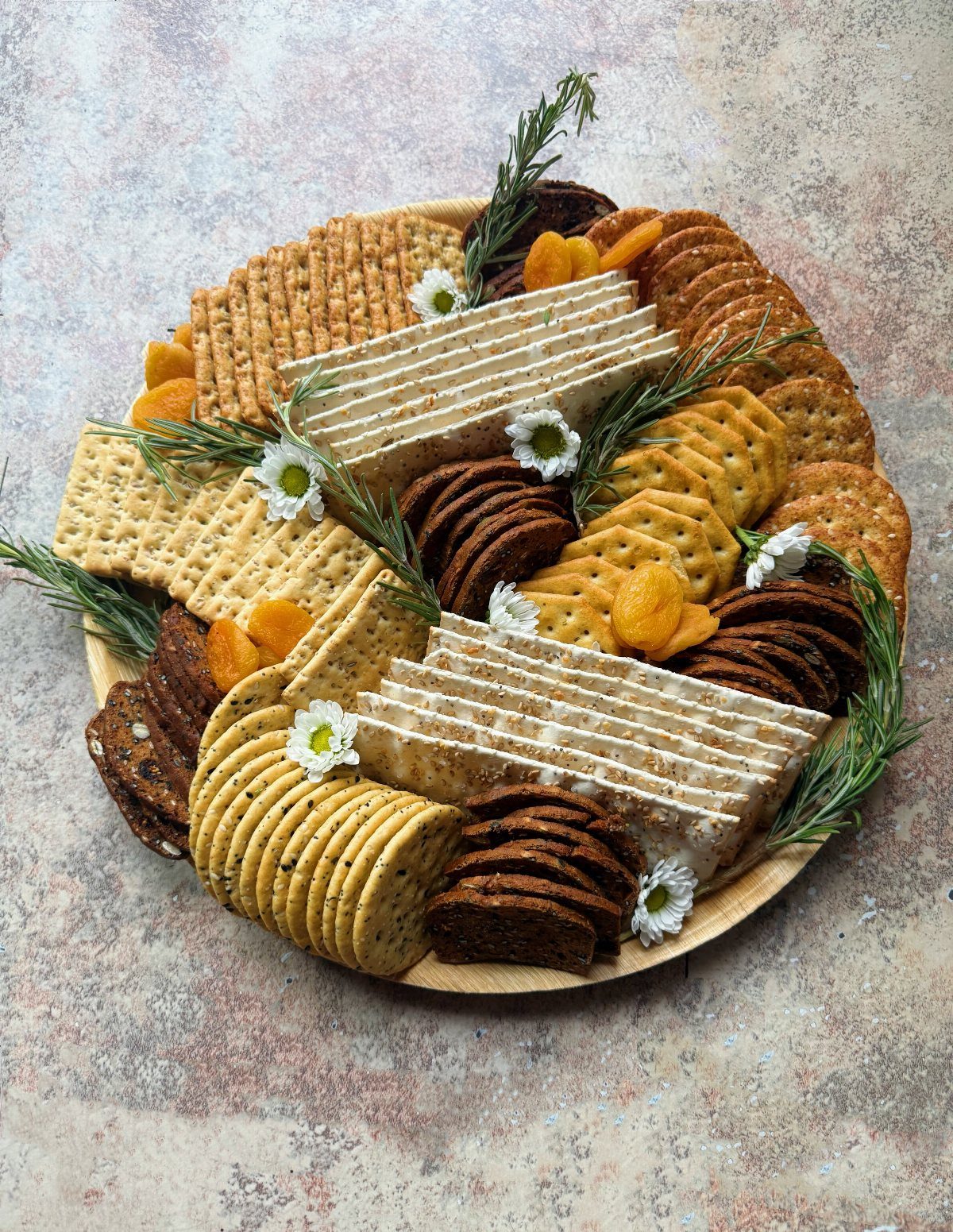
Crackers and bread are what turn a pile of cheese into something people can actually eat. Dark rye slices and a mix of crackers give you both a sturdy base and a milder one.
Toast the bread lightly so it holds up under a thick spread. Fan the crackers in a few separate clusters instead of one big stack, which keeps them from going soft and lets guests reach from any side.
Dried apricots and a few rosemary sprigs tucked between them make the empty gaps look intentional.
9. Salami Roses
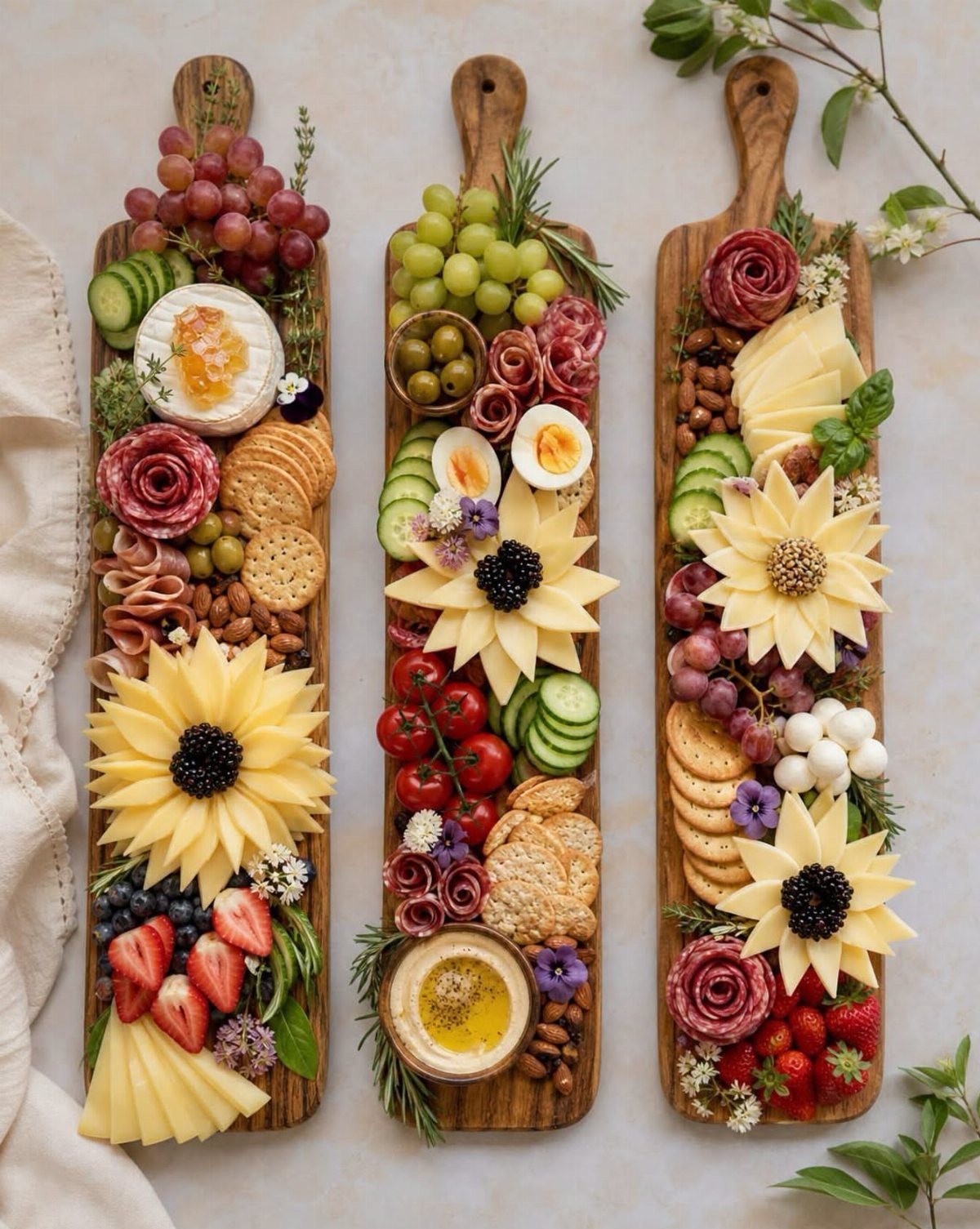
Salami roses pass for a restaurant trick, yet each flower takes only a few minutes once the first one is done.
Fold slices in half, overlap them around the rim of a glass, then flip the glass over onto the board and lift it away.
I like pairing them with cheese cut into sunflower shapes, since the two together make a whole bouquet from cold cuts. Make the roses an hour or two ahead and keep them covered in the fridge.
10. Vegan Charcuterie Board
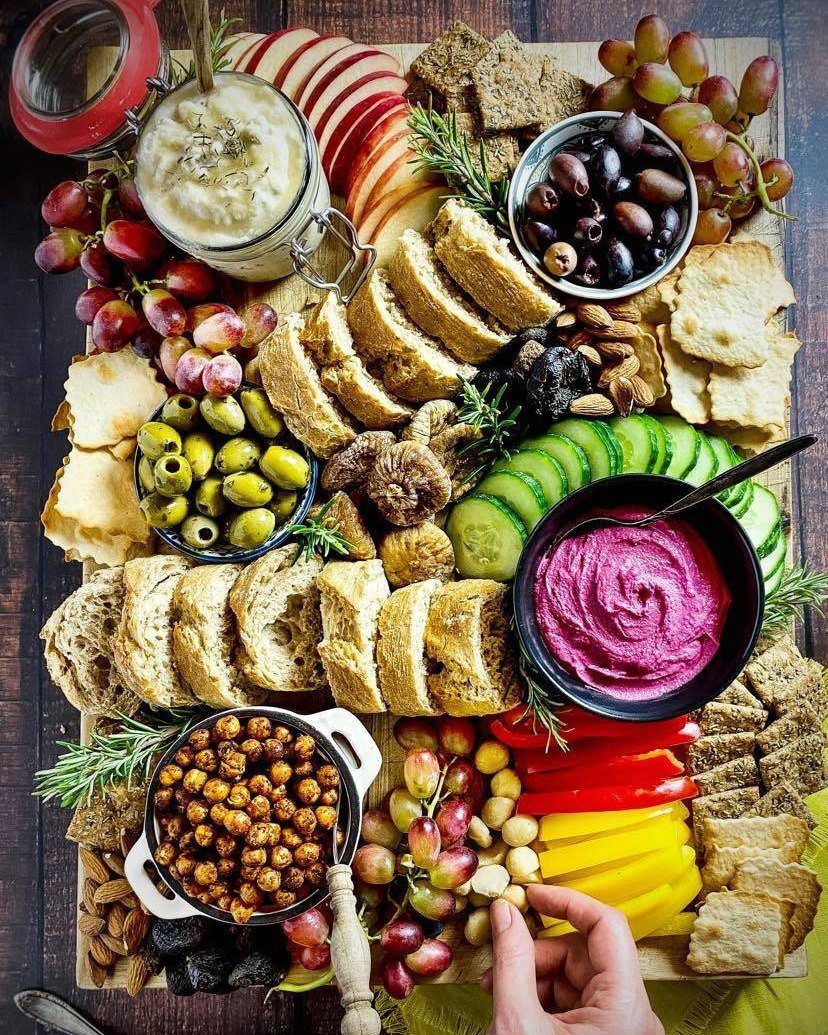
A plant-based board holds up best when it is built on dips, because dips replace the cheese as the thing people come back for. Set out two or three, then surround them with olives, sliced bread, fruit, vegetables, and nuts.
This is the board to make if even one guest skips meat and dairy, and I would make it for the whole table.
Check the bread label, since some loaves hide dairy, and keep the nuts in a small pile so they don’t scatter.
11. Small Pumpkins
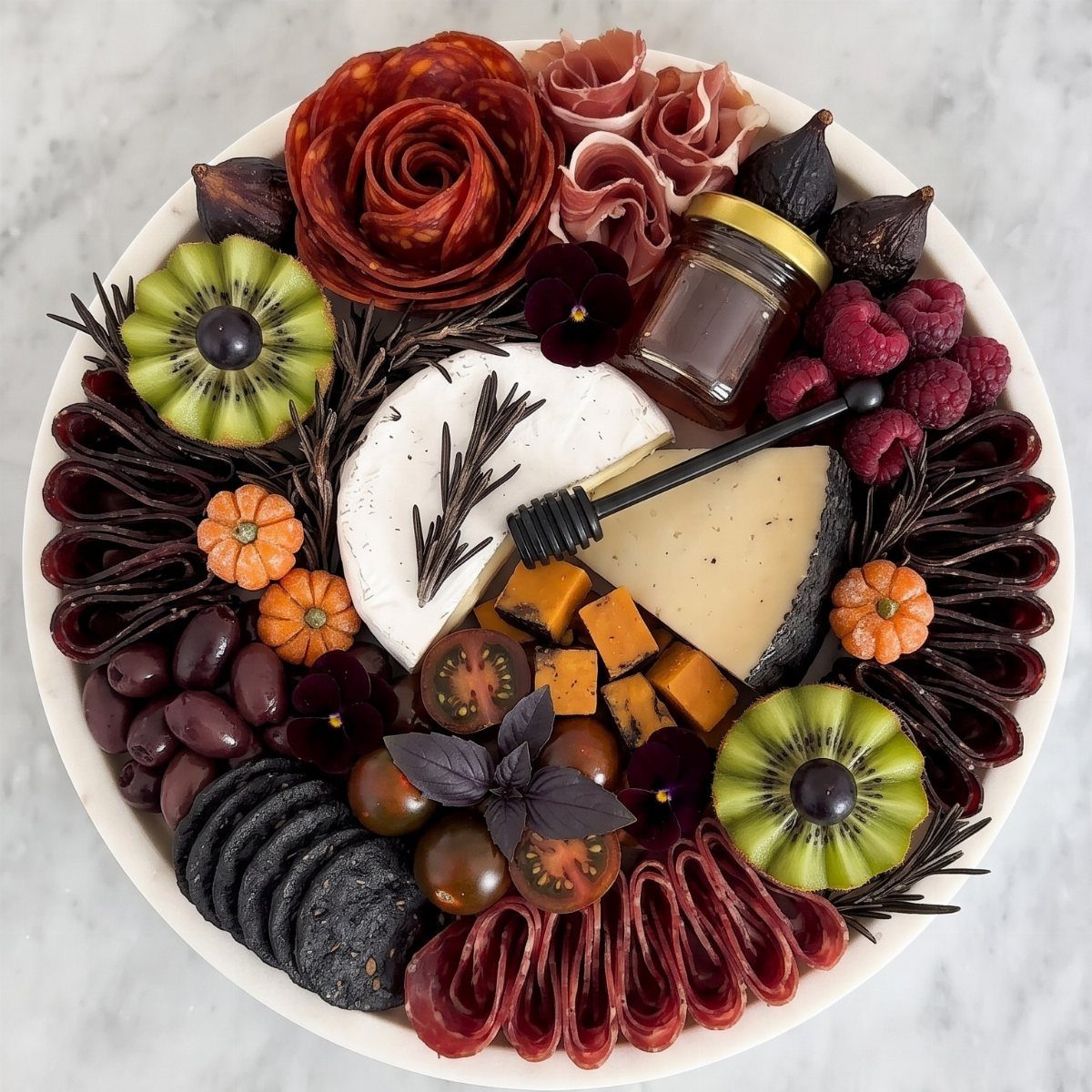
Small decorative pumpkins turn an ordinary round board into a Friendsgiving one with almost no work. Tuck small pumpkins between the cheeses, meats, and fruit, and the orange does the decorating.
Keep them as decoration only.
Wipe each one clean, set it on the board so it doesn’t touch cut food, and use the same pumpkins afterward as table decor. Buy them whole and skip carving, since nothing about this idea needs more effort.
12. Seasonal Colors Charcuterie Board
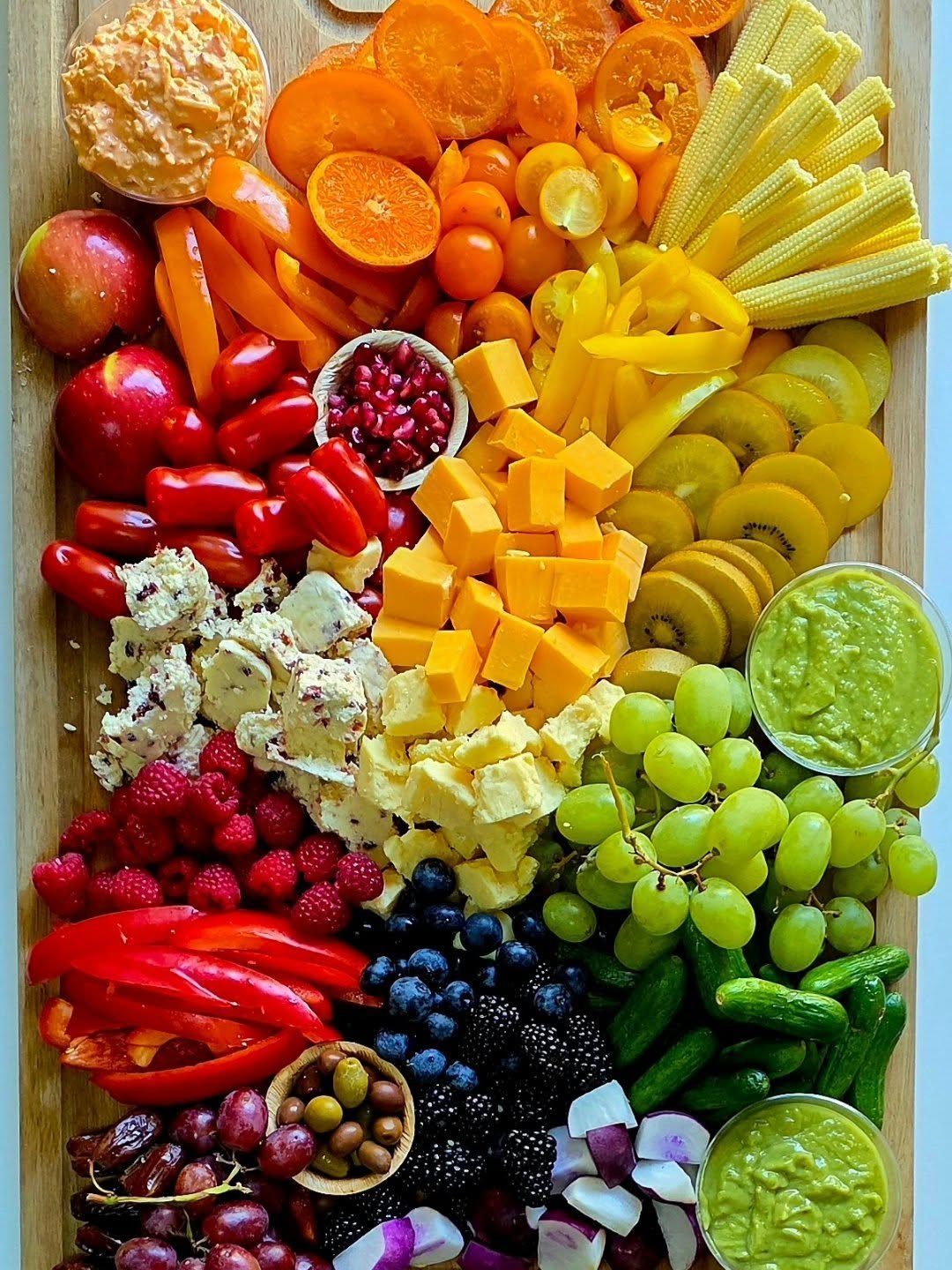
Arranging food by color gives a board its look without any special equipment. Lay fruits, vegetables, cheeses, and dips in a gradient, running from one end to the other in color order.
Start by choosing one item per color, then repeat that color in a second or third form so each band reads as a stripe.
Autumn reds, oranges, and yellows make the most seasonal version, and I’d keep the dips in small bowls at the band edges.
13. Turkey-Shaped Charcuterie Board
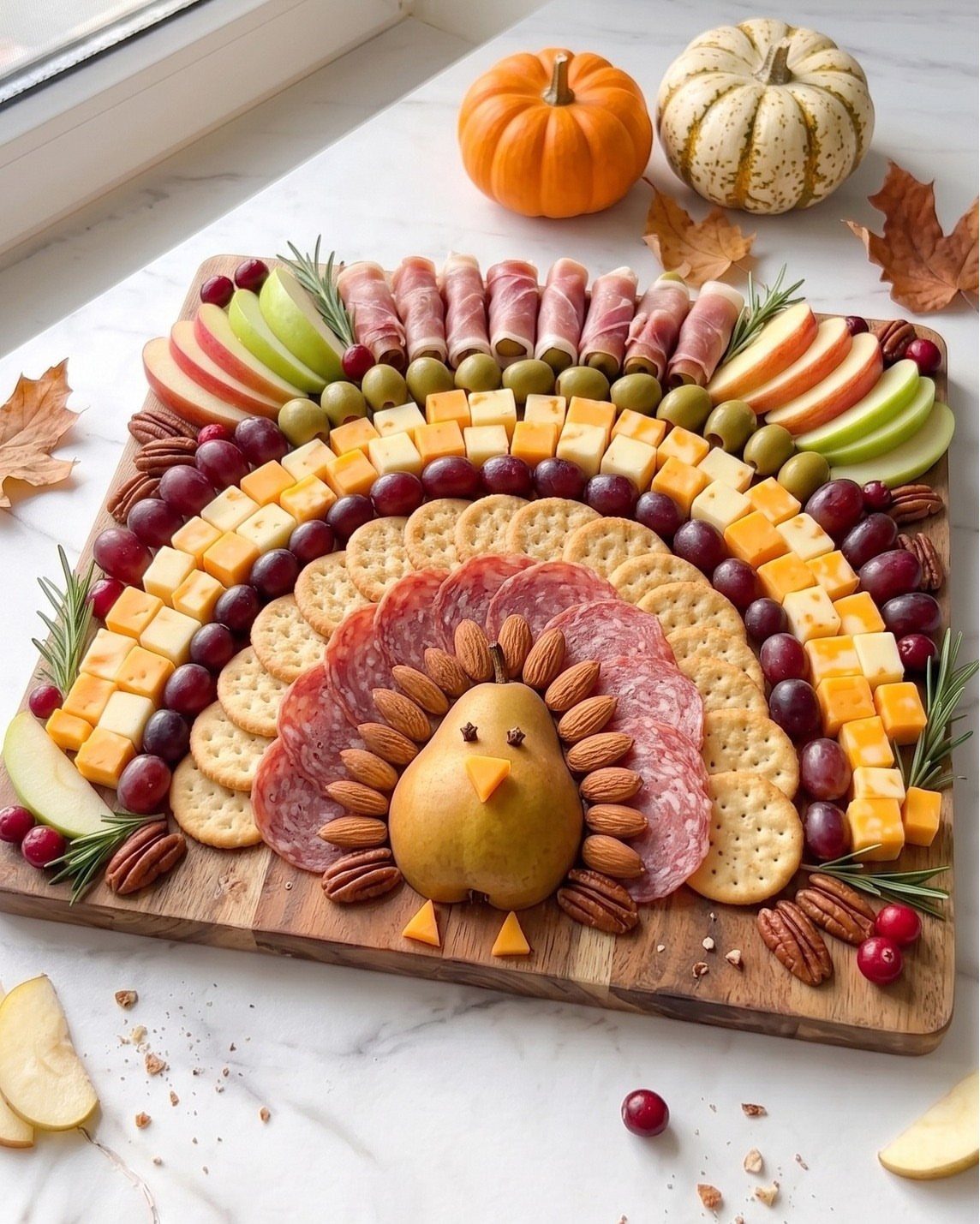
A turkey board earns its place by looking like the main course before a single bite is taken.
Crackers, meats, cheeses, and fruit are arranged into the bird’s shape on a wooden platter, so you shop for ordinary board items and do the work with placement.
Build the body first, then fan crackers or fruit out behind it as tail feathers. Pumpkins and autumn leaves around the platter finish the table without extra cost.
14. Individual Charcuterie Cups
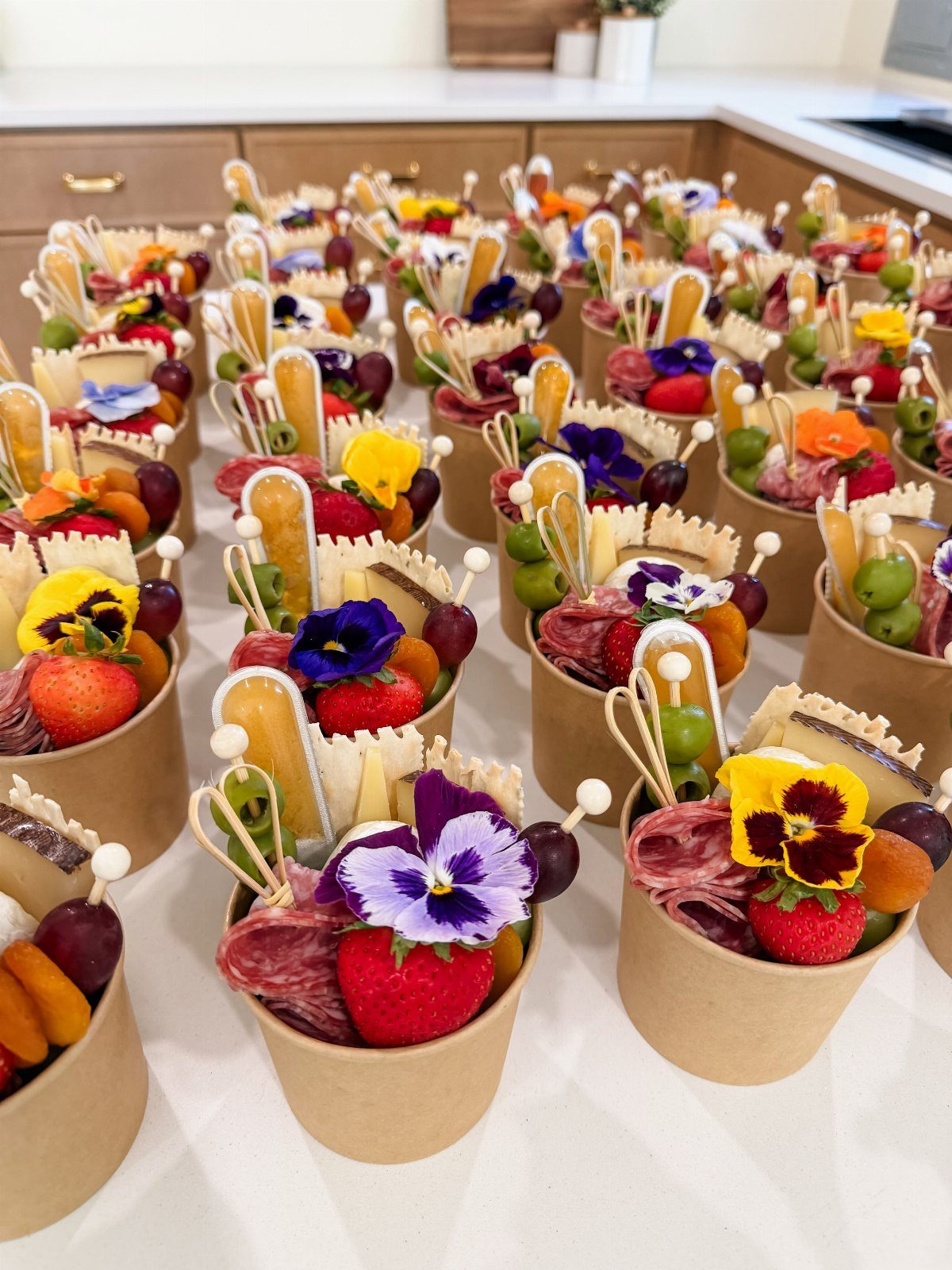
Cardboard cups filled with skewered meat, cheese, and fruit turn a board into grab-and-go portions, so nobody hovers over the spread or crowds the cheese knife.
Skewers keep each cup tidy, and a few edible flowers on top turn a dozen into a deliberate display.
I’d choose this for a bigger crowd, since people carry a cup around while they talk. Fill them on a counter in one assembly line, one ingredient at a time.
15. Pumpkin-Shaped Cheese Board
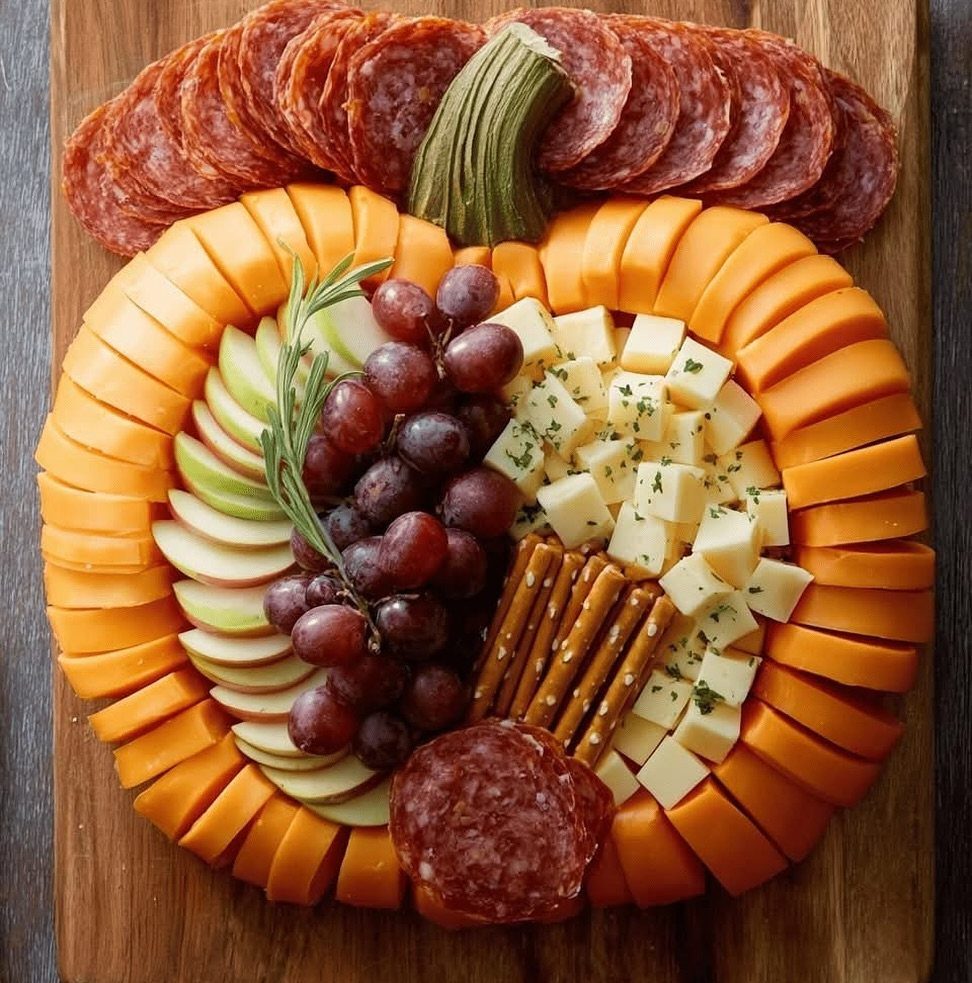
Overlapping cheddar slices in a pumpkin outline give you a shape guests recognize from across the room. Fill the middle with grapes, apple slices, cubed cheese, pretzels, and salami, and a plain wooden board looks planned.
Cheddar is a cheap, familiar choice, which suits a budget Friendsgiving. Lay the outline first, then pack the fillings in tightly so the shape holds and no bare wood shows.
16. Dessert Charcuterie Board
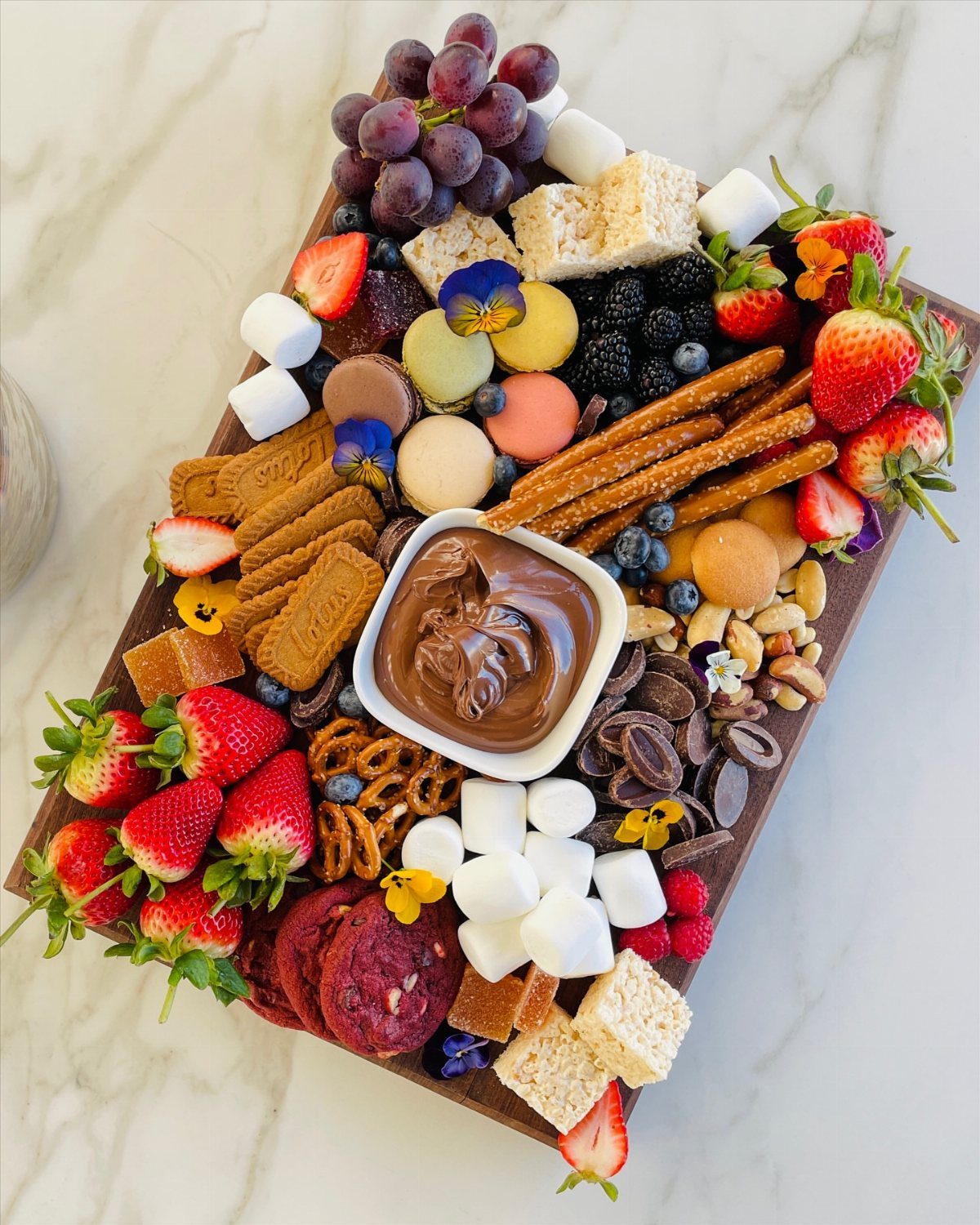
Macarons, marshmallows, cookies, berries, and pretzels around a bowl of chocolate dip make a board that works as the whole dessert course. Salty pretzels next to sweet items keep it from tasting one-note.
Set the dip bowl in the center and pile the dippers around it. Store-bought cookies and macarons keep the work close to zero, and fresh berries add color against the browns and whites.
17. Individual Charcuterie Bowls
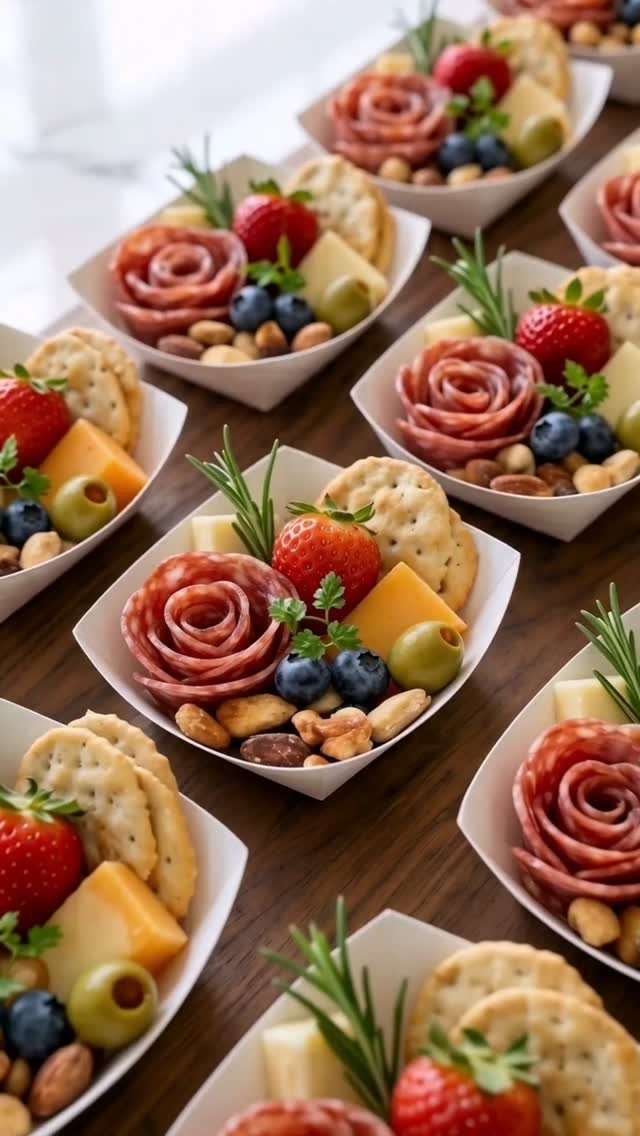
Small square bowls give each guest a private snack: crackers, cheese, a salami rose, a few berries, and nuts, all in one place. That means no double-dipping worries and no picked-over board by the end of the night.
Fill all the bowls in one pass, ingredient by ingredient, so every portion matches.
18. Floral Bouquet Charcuterie Board
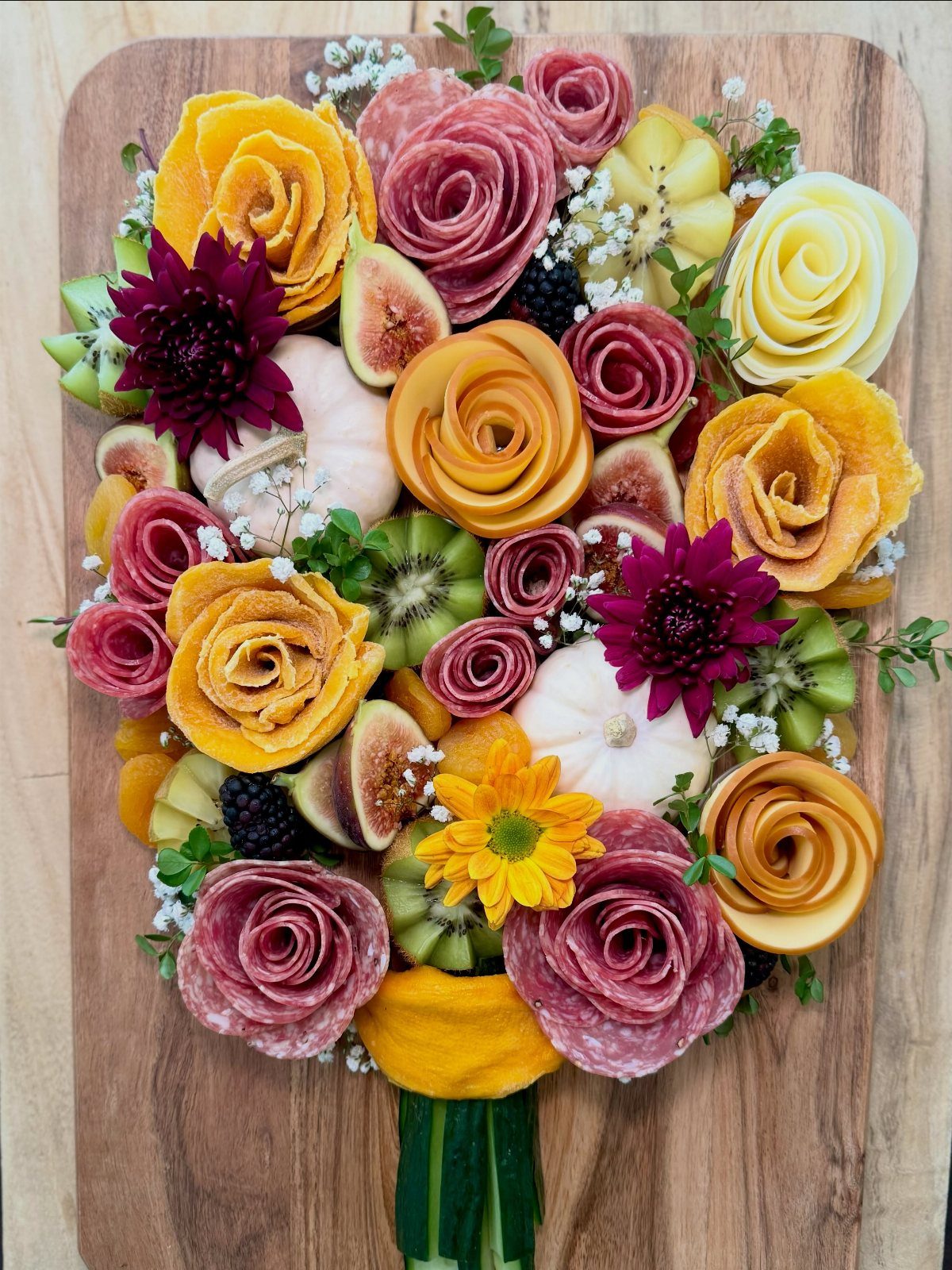
Salami roses, cheese roses, kiwi slices, figs, and blackberries can be arranged on a board like a loose bouquet, with real flowers and baby’s breath poking through the gaps. Small pumpkins at the edges tie it to the season.
Build it from the center outward, placing the roses first and filling the spaces with fruit. Keep the flowers away from food people will eat directly, and I’d treat them as garnish only.
19. Charcuterie Letter Box
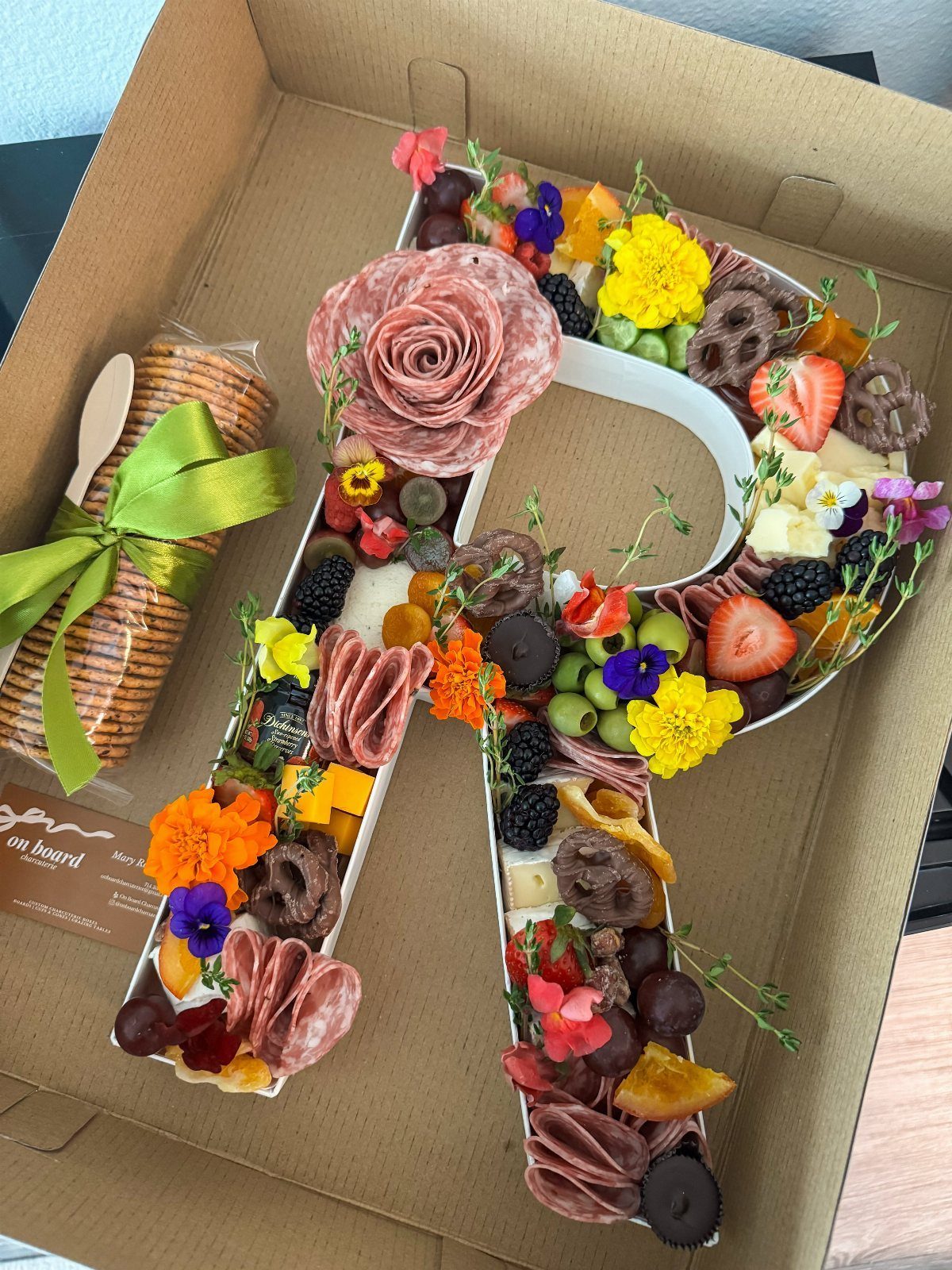
A cardboard box cut in the shape of a single letter turns a charcuterie spread into a personal piece: use the host’s initial, or the first letter of the family name, and the board becomes part of the table centerpiece.
Fill the letter with sliced meats, cheeses, and fruit, then press edible flowers and fresh herbs into the gaps.
Fill every gap so the letter holds its shape and the board stays hidden. A roll of crackers set beside the box keeps them from going soft against the wet fruit.
Line the box with parchment first, since cardboard soaks up moisture. Skip it if you want a single big board; it suits a smaller group best.
Tips for Assembly
Order matters when you assemble: set down the cheeses and meats in their own zones first, tuck in the jams and spreads next, add the fruit and vegetables after that, and fill what’s left with crackers and sweets.
Folding or rolling the meat before it goes down gives the board height.
Anything that rolls, like grapes or olives, goes in a small bowl so it stays put.
Let pieces overlap as you place them, and every few minutes stand back to look for bare patches while they’re still small enough to fix.
Garnish with herbs last. Then tuck in the forks, spreaders, and tongs where guests will reach for them, so nobody has to ask.
Serving Suggestions
For meat and cheese, I figure 1–2 ounces of each per guest. That holds when the board is a snack before a big meal; if it is the meal, buy more.
Your budget, your guests’ appetites, and whatever else is on the menu all move that number. Count the other dishes before you shop.
Ask guests about dietary needs when you invite them. Then make sure at least a few items on the board suit anyone who skips meat, dairy, gluten, or nuts, and keep those items from touching the rest.
Rolled spirals or a prosciutto "river" in an S shape look good and let people pick up a single slice.
Your exact yield depends on how much meat and cheese you buy. Plan on 1 to 2 ounces each of meat and cheese per person, especially if it’s a snack board that precedes a large meal such as Thanksgiving dinner.
Storage and Prep
Assembling the board a day ahead is workable, and it frees up Thanksgiving week. Cover it tightly and refrigerate it overnight.
Pull it out to come to room temperature before guests arrive, since cold cheese tastes muted. Keep it covered while it warms, and don’t leave it out for long stretches; a couple of hours is a sensible limit.
Hold back anything that goes soft or browns, such as crackers and sliced fruit, and add it right before serving. Garnish and utensils go on last too.
Frequently Asked Questions
What is a good alternative to a charcuterie board?
A cheese-only board or a dessert board both work well. Individual cups or small bowls are another option, since each guest gets a private portion and nobody picks over a shared board.
What foods are typically on a charcuterie board?
A typical board has cured meats and cheeses, then fruit, nuts, and a few spreads or jams to fill in around them.
Crackers or bread, plus briny items like olives and pickles, cut through the richness of the meat and cheese. Raw vegetables and dips are common extras, and a vegan board swaps the meat and cheese for several dips.