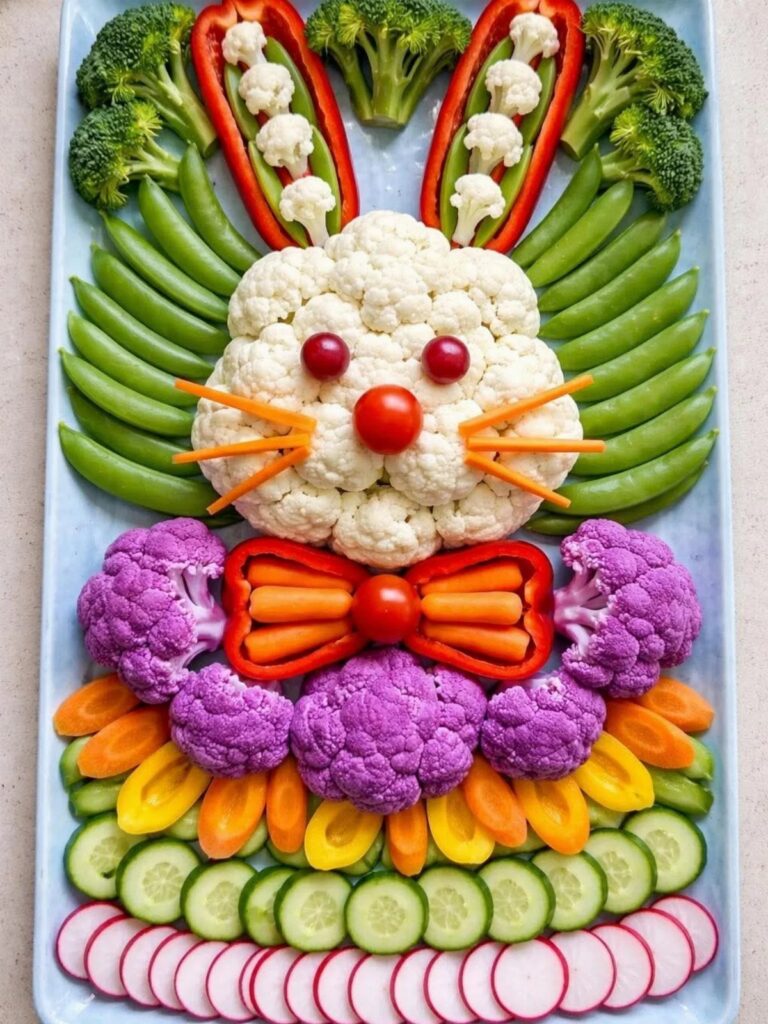
The list runs from a plain Colorful Veggie Tray built around a dip bowl to themed builds like the Bell Pepper Train and the Picket Fence Garden Tray.
The one you pick depends on who is eating: a house full of kids suits hollowed peppers cut into train cars, while the single-bowl board with wedges of carrots, asparagus, broccoli and snap peas is the easiest for a mixed crowd.
Whatever you choose, the cutting can be done up to 4 hours ahead, so the tray itself is a last-hour job.
1. Easter Bunny Veggie Tray
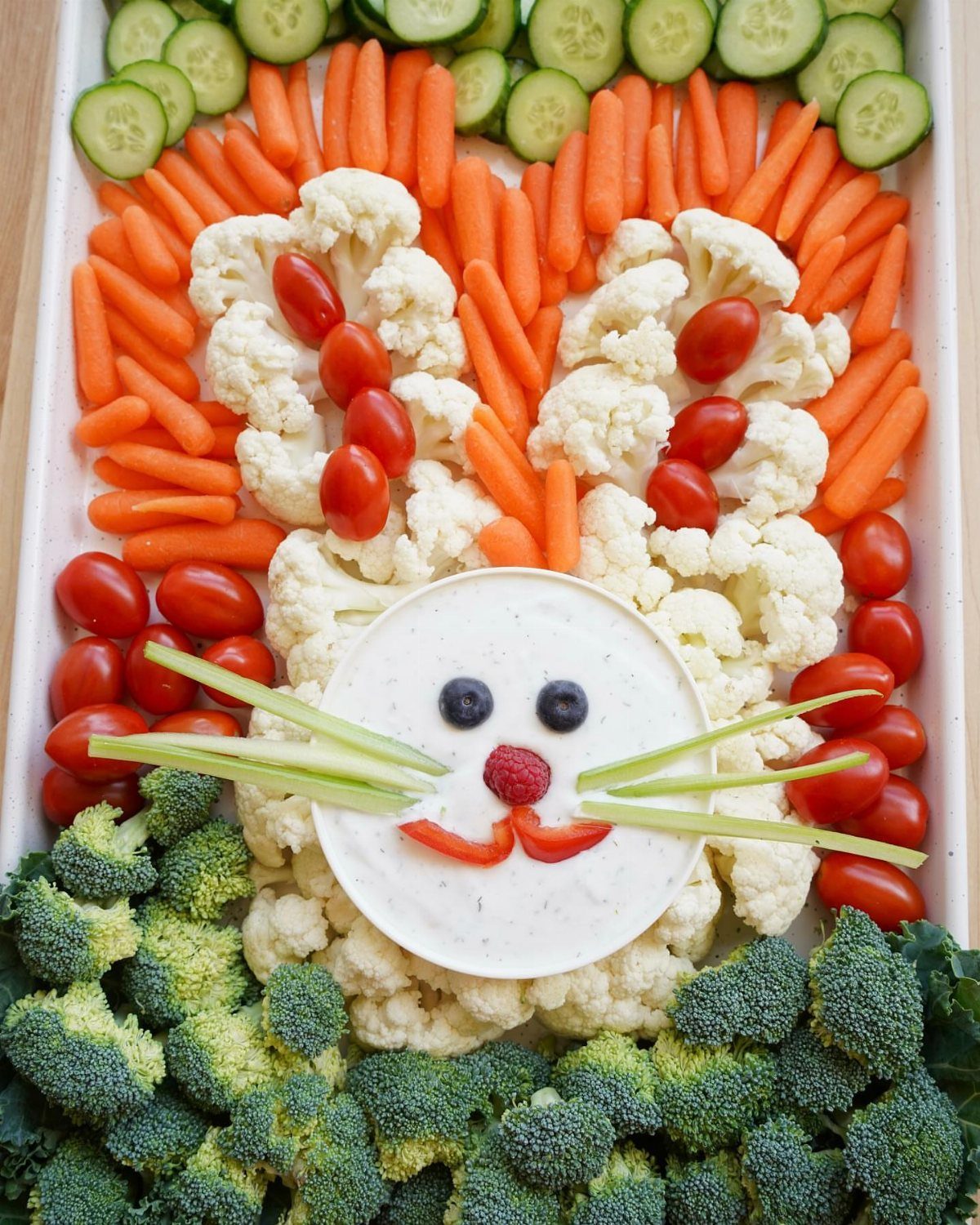
Cauliflower makes the best bunny, and I’d build the face from it: a mound of florets for the head, with broccoli and carrots rising as ears.
Cherry tomatoes and cucumber slices fill in the features, and a small scoop of dip works as the nose.
Set the dip in place first, then build outward so nothing slides. A plain white platter keeps the colors clean.
2. Homemade Dips
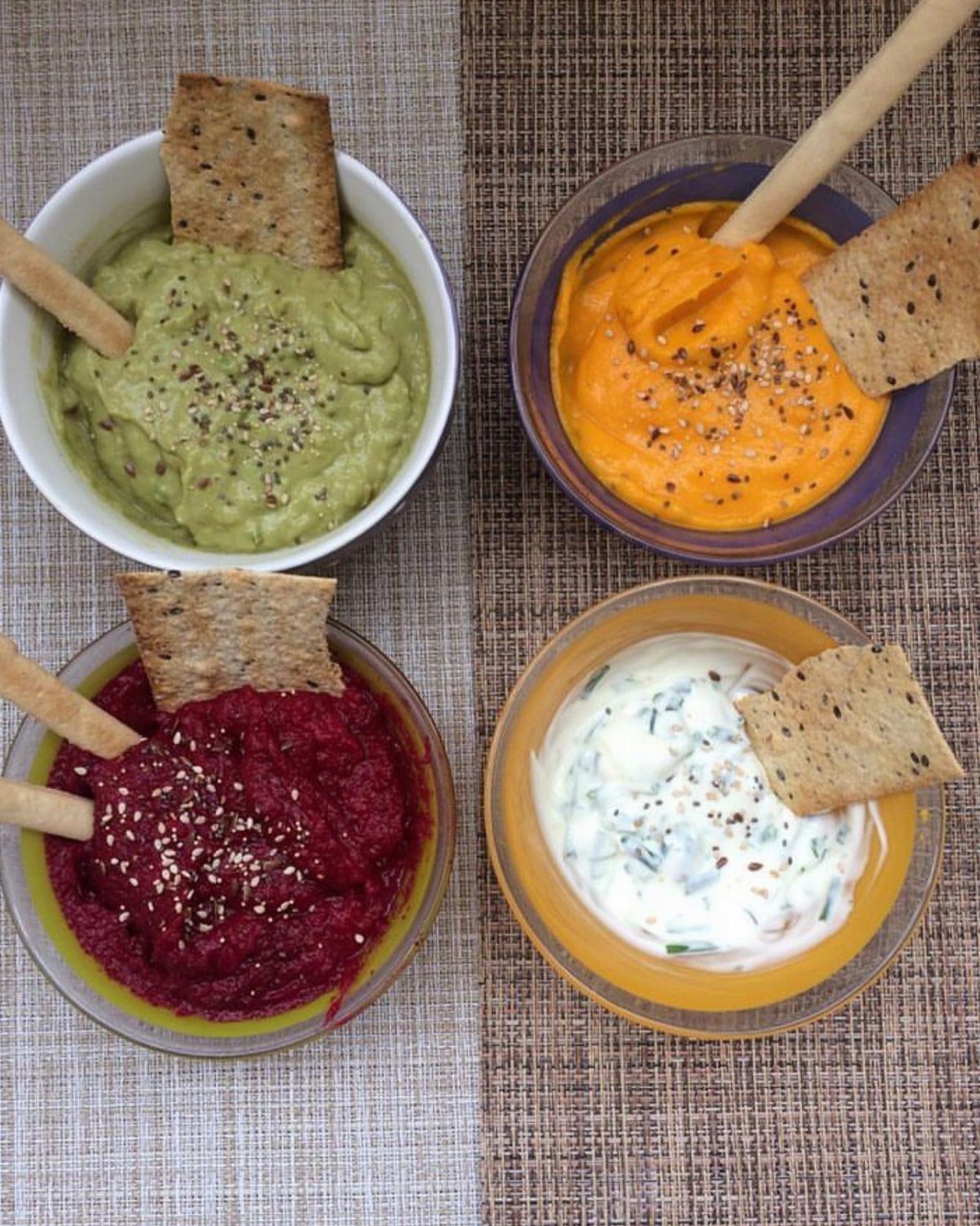
Four bowls in four colors do more for a tray than any amount of fancy cutting.
I’d make them ahead, since homemade dips usually taste better after a rest in the fridge.
Offer crackers and breadsticks beside the vegetables for guests who want something crunchier. Small bowls keep the spread tidy.
3. Colorful Veggie Tray
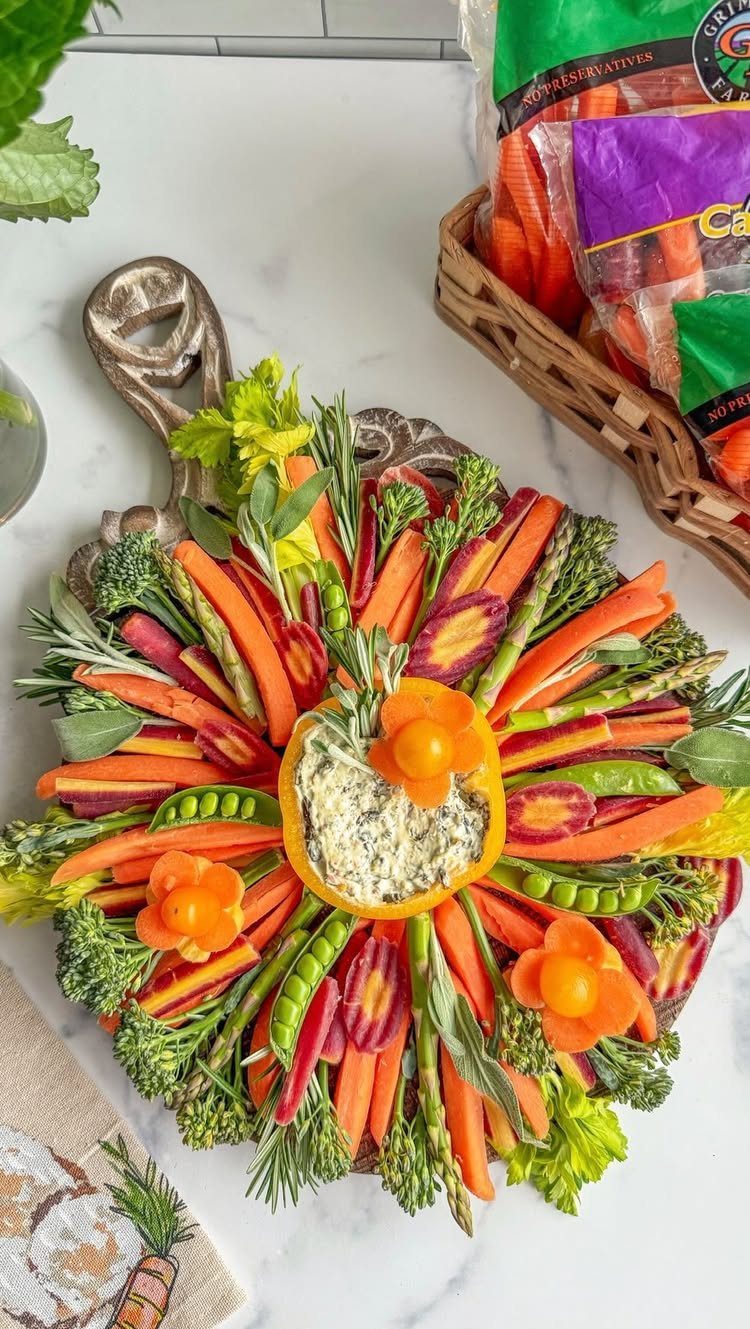
A round board with the dip in the center is the easiest layout I know, because every vegetable gets its own wedge. Carrots, asparagus, broccoli and snap peas give you green and orange with very little work.
Carrot flowers are the detail to copy.
Add them last, near the dip, so they sit on top of the pile. A basket of baby carrots nearby lets you refill the board as it empties.
4. Bell Pepper Train Veggie Platter
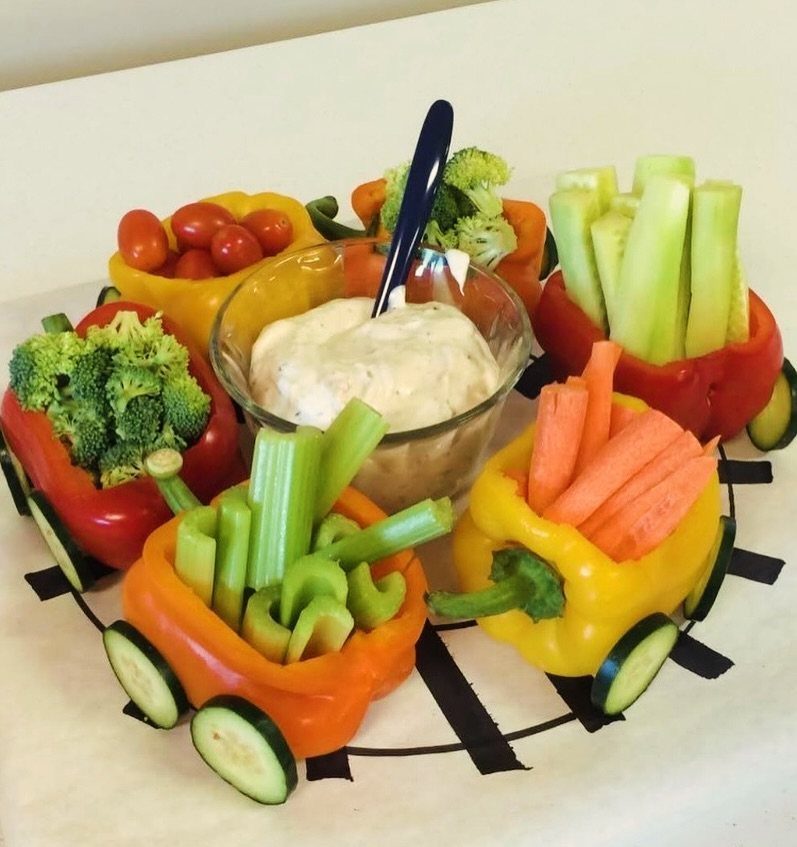
Hollowed bell peppers are the whole trick here, cut into train cars and loaded with sliced vegetables. Cucumber slices become wheels, and a glass bowl of dip in the middle acts as the engine’s cargo.
Choose peppers in different colors so the cars read as separate.
Cut the tops flat so they sit steady. This is the one I’d make for a house full of kids, and the peppers double as edible serving bowls.
5. Mini Vegetable and Cheese Figures
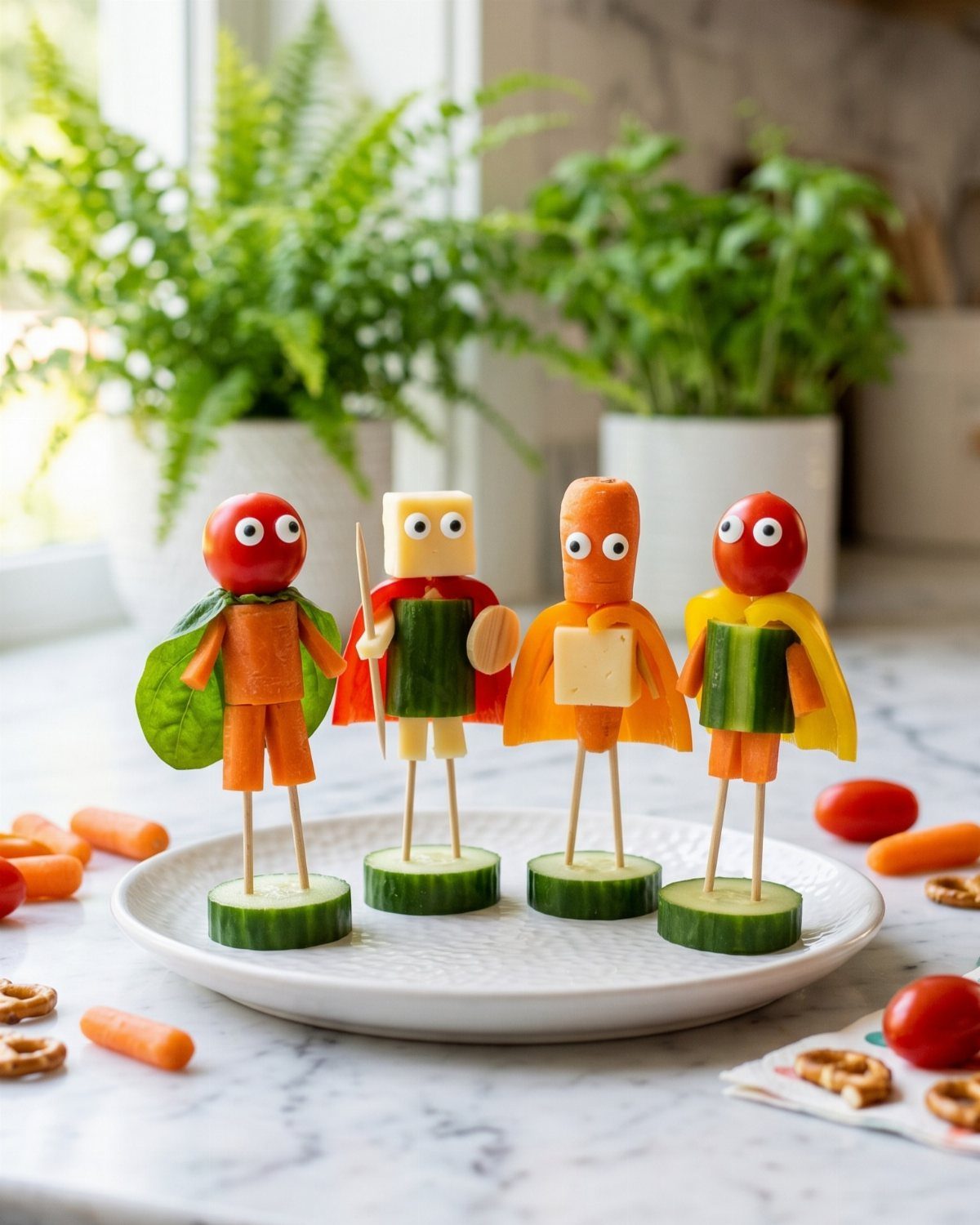
Cherry tomatoes, cheese, carrots and cucumber slices can be stacked into tiny characters, one per guest if you like. Each figure takes only a few pieces of vegetable and cheese, so a whole plate of them goes together fast.
These work best as an individual treat rather than a shared tray.
Toothpicks hold the pieces together, though I’d skip them for small children. Make them close to serving time so the cucumber stays crisp.
6. Picket Fence Garden Tray
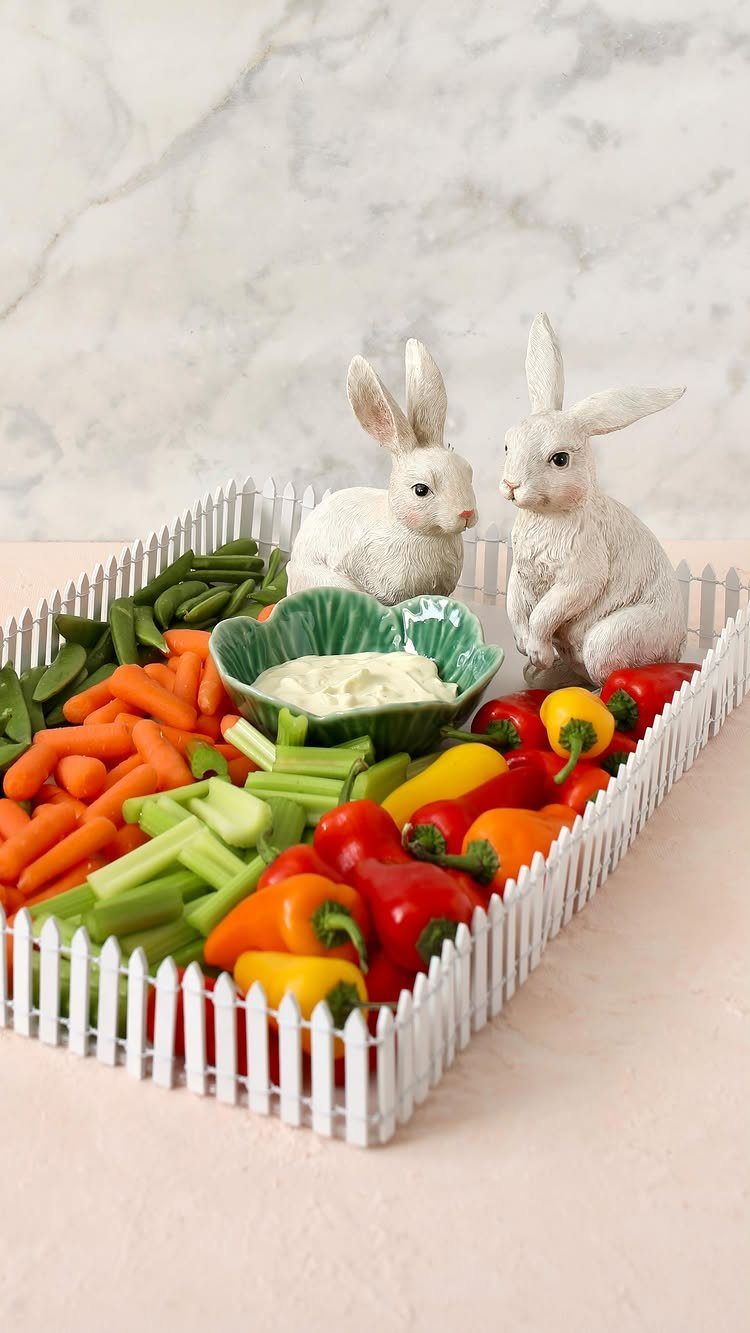
A white picket fence turns an ordinary tray into a spring garden. Carrots, celery, peppers and snap peas stand inside the fence like rows of plantings, with a dip bowl in the middle.
Two white rabbit figurines add the Easter touch without extra chopping.
You can buy a small fence at a craft store, and the figurines can be reused every spring. Cut celery and carrot sticks to similar heights so the rows look planted.
7. Planted Garden Dip Tray
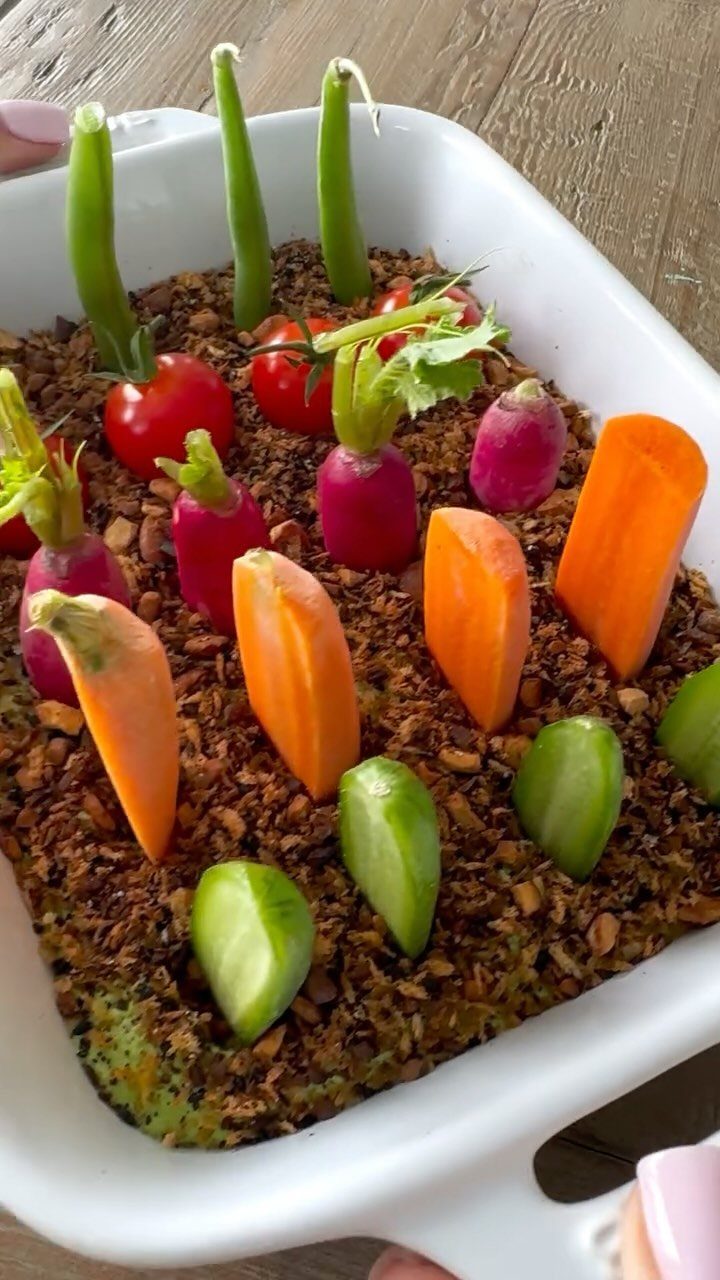
A dip works as the soil in this tray, and the vegetables go in standing up like rows in a garden bed.
I’d choose a thick dip so the stems stay upright.
A green dip reads as grass, and a sprinkle of brown crumbles over the top gives it a planted-soil look. Push the vegetables in at slight angles, with the tallest toward the back.
Cherry tomatoes need a toothpick or a spot against a taller stick to stay put. Guests dip as they pull, so the garden thins out as they go.
Choosing Vegetables
Mix colors, textures and shapes so the tray never looks like one pile of the same thing. Carrots, celery, cucumbers and radishes are the dependable base, and red, yellow and green bell peppers and cherry tomatoes add color.
Blanching works well for snap peas, asparagus, string beans and broccoli: 1–2 minutes in boiling water, then an ice bath, gives brighter color and a crisp-tender bite.
Lettuce or cabbage leaves make a crisp border that keeps cut vegetables from sliding around. Olives, cheese, pickles and fresh herbs belong on the same platter when the menu calls for more than vegetables alone.
Preparing Veggies in Advance
Vegetables can be cut a day before serving.
Wrap the platter loosely and refrigerate it until service. If you would rather chop the day before, store the pieces in airtight containers and assemble the tray later.
The vegetables taste best when the tray is assembled no more than 24 hours ahead. Wrap leftovers and refrigerate them for 3 days at most.
Serving Suggestions
Offer more than one dip so guests can choose. Homemade vegan ranch, guacamole and hummus make a good trio.
A hollowed bell pepper, small cabbage or mini pumpkin holds dip at the center, and lettuce or cabbage leaves line the edges.
A fruit tray or cheese board beside the vegetables balances the table, and it gives guests who skip the raw vegetables something to reach for.
Frequently Asked Questions
What are some Easter snacks?
A veggie tray is an easy start, and a fruit platter or a cheese board next to it rounds out the table.
A tray built as a bunny face or a spring garden makes it feel like Easter without extra work. Guests who skip raw vegetables then have something else to reach for.
Is it cheaper to buy or make a veggie tray?
Making your own is usually cheaper, depending on the size of the tray.
Pre-made trays and pre-cut vegetables carry a premium for the time they save. Building it yourself also lets you shape it into something like a bunny or a garden.
How far ahead can I make a veggie tray?
Cut the vegetables up to a day before serving, wrap the platter loosely and keep it in the refrigerator.
Chopping a day early works fine for me: pack the cut vegetables in airtight containers and build the tray when guests are close.
A finished tray holds up for about 24 hours in the fridge, and leftovers are good for 3 days at most.